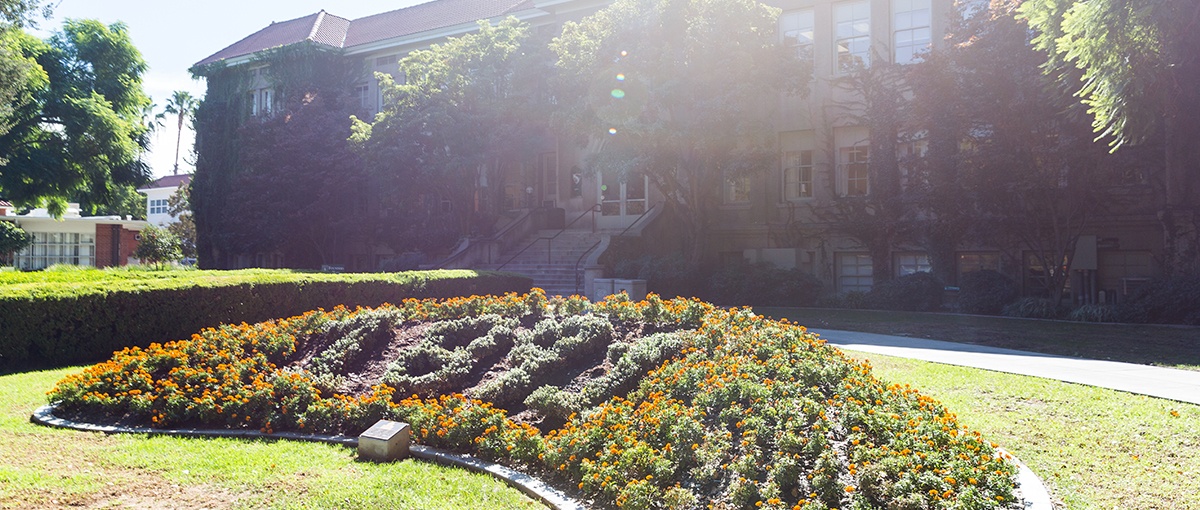
Since 1891, the University of La Verne has been dedicated to the belief that a quality, values-based education enriches the human condition by engendering service, scholarly accomplishment, and professionalism. Though decades of growth have changed its appearance and reach, La Verne has retained its sense of purpose, seeking to provide students with individual attention to spark personal growth through intellectual challenge and development. The University takes pride in knowing its nearly 50,000 alumni worldwide have made a difference in their professions and communities.
- The Colleges
- Campus Accreditation, Planning, and Coordination
- Students
- Alumni
- Faculty and Academic Distinction
- Athletics
- Diverse Learners
- Institutional History
- Location
The Colleges
The College of Arts and Sciences (CAS) engages undergraduate students in over 50 majors, minors, and certificate programs, as well as two masters’ degrees and a doctorate in Clinical Psychology. Close student-faculty relationships help students discover and develop their talents. A dedicated faculty of scholar-teachers lead students toward achieving excellence both in their chosen field and in an enlightened life of service. Each undergraduate major offers a hands-on or research capstone project, and the January interterm offers an intensive learning experience that permits local, national, and international study opportunities. The Psy.D. program is accredited by the American Psychological Association and its faculty are known nationally for their research and publications.
The College of Business & Public Management (CBPM) includes undergraduate programs in business, public administration, and health management as well as masters’ degrees in business, organizational leadership, health, and public administration (NASPAA accredited) and a doctoral degree in public administration (D.P.A.). The CBPM offers a broad-based management education that emphasizes the application of theory to management practice and builds the conceptual skills and core values its students need to become effective leaders and managers in business and public management. Its years of providing pertinent curriculum focusing on effective decision making and stressing the knowledge relevant in today’s challenging global environment has earned the college an excellent reputation within the business, public administration, and professional communities. In addition, it has a proud tradition of engaging students in case studies of regional businesses to examine market analysis and business plans.
The College of Education & Organizational Leadership (CEOL) includes undergraduate programs in education as well as several masters’ degrees and a doctorate degree (Ed.D.). The CEOL develops outstanding leaders and education professionals, caring individuals who impact instruction on all scholastic levels. Operating under four guiding principles – caring, excellence, leadership, and diversity – CEOL creates exceptional learning opportunities that foster intellectual, ethical, and social responsibilities within its students, instilling the knowledge, skills, and disposition in each to imagine, explore, and design the future. It established institutes that foster dialogue in the fields of child development, educational policy, and school reform. An innovative, customized assessment program lays the foundation for CEOL’s effort to achieve National Council for Accreditation of Teacher Education (NCATE) accreditation.
The College of Law (COL) is located on its own campus in Ontario, California. The COL offers a rigorous academic program for its J.D. that provides a solid foundation in legal theory, lawyering skills, analytical thinking, and ethics and professionalism – areas critical to the modern practice of law. Both curricular and co-curricular programs are structured so that a student’s legal education is grounded in the real world, preparing future lawyers to put the law to work. The College of Law has produced a substantial body of scholarship with national and global recognition. The University of La Verne Law Review holds an annual symposium, which brings law professors from across the country to the COL campus. Granted provisional approval by the American Bar Association in February 2006, the college has applied for full approval from the ABA and expects to receive a final decision on its application in August 2010.
Campus Accreditation, Planning, and Coordination
Originally accredited in 1955, the University is presently accredited by the Western Association of Schools and Colleges (WASC). The most recent WASC visit, a Capacity and Preparatory Review, came in February 2010, and the current accreditation process will culminate in October 2011 with WASC’s Educational Effectiveness Review. Information on La Verne’s accreditation process is available at www.laverne.edu/wasc/.
La Verne operates under the auspices of a University Strategic Plan and a Campus Master Plan approved in 2007, with the Master Plan amended in 2009. In 2010, President Steve Morgan announced a reorganization of La Verne’s upper administration, in part to accommodate concerns expressed by WASC’s accreditation team after its February 2010 visit. The reorganization consolidates all academic programs, recruiting, admissions, academic services, and co-curricular services under the leadership of the Provost (see appendix).
Over the past decade, La Verne has renovated or newly constructed over half of its buildings, and it has completely developed the central campus core with a remodeled Sports Science & Athletics Pavilion, a landscaped public plaza, and built a LEED certified Campus Center. In recent years, the University acquired 50 acres of vacant land located just over one-half mile from the main campus. This “Campus West” site provides acreage for future development, effectively doubling the institution’s land holdings within its traditional home city.
Students
La Verne currently hosts 1,540 main campus traditional undergraduates and 1,665 main campus graduate students. Total enrollment is 7,500 including adult learners, graduate, law, and online students. The University celebrates its students’ ethnic diversity: 36.1% Latino/Hispanic, 34.8% Caucasian, 10.4% African American, 10.6% Asian American/Pacific Islander, 0.9% American Indian/Alaska Native, and 6.7% Other identities.
The University’s focus on the individual student is evidenced in its student/faculty ratio of 12:1, and the fact that 71% of classes have no more than 19 students. Professors are personally engaged and committed to helping students achieve their academic and professional goals.
More than 90% of La Verne students receive some form of financial aid. The average undergraduate recipient of financial aid has a package of $22,535. The traditional age undergraduate programs have a high retention rate; the 2009-10 academic year had a persistence rate of over 93%. According to the 2008 National Survey of Student Engagement (NSSE) Report, over 90% of freshmen and seniors regarded their entire educational experience at La Verne as being “excellent” or “good.” More than half would still choose to attend La Verne if they could start over again, and a significantly higher percentage evaluated the quality of academic advising they received as excellent when compared to their peers at other four-year private colleges and universities.
The University has a long history of commitment to service. For more than 50 years, La Verne has sponsored a Summer Service program that partners with non-profit organizations in which students serve in various capacities. In addition, all undergraduates fulfill a community service requirement, while community engagement takes place in courses and through student clubs and organizations.
Alumni
La Verne alumni can be found in every state of the union, in 66 countries across the globe, and have distinguished themselves in nearly every field. Thirty-four judges hold a J.D. from the College of Law. Many alumni are business owners, CEOs, or presidents serving national and international corporations. City managers, police chiefs, city and county department heads, and many public management and law enforcement officials throughout the state hold public administration degrees from La Verne. Reflecting the high value the University places on service, many alumni are teachers, ministers, psychologists, or counselors. As a recognized leader in education since the 1920s, the University is proud that 25% of California school superintendants hold a La Verne Ed.D., and five college/university presidents earned degrees from La Verne.
There are distinguished alumni in the performing arts, many who have made significant contributions to the arts both in the classroom and in professional performance. Many alumni involved in communications fields hold positions in broadcast and print media in the competitive Los Angeles/Southern California market and include television and radio personalities. A number of former student-athletes have gone on to professional playing careers, with many more enjoying coaching careers spanning from prep to collegiate to pro competition.
Faculty and Academic Distinction
La Verne’s faculty is made up of some 200 scholar-teachers that focus on creating a learning community that puts the student first. The La Verne educational experience offers close student-faculty interactions. Virtually every undergraduate student is involved in a student thesis project that involves one-on-one mentoring by a faculty member. The January interterm also provides a focused learning experience in small groups, allowing for individualized attention, in-depth scholarship, and service learning as well as opportunities for field study and international travel. The faculty prides itself on its ability to work with a diverse student population and to help them develop to their full potential.
La Verne’s approach to scholarship and education is best captured by the phrase “theory and practice.” We believe that a university can play a transformative role by bridging the gap between the abstract role of academic theory and the world of practical problems. Our faculty brings an academic perspective to these real world problems and integrates it into both research and teaching. Specific expressions of the “theory and practice” approach are:
In the CAS, the merging of theory and practice is seen through two nationally accredited programs to prepare students for lead roles in their respective professions: the Doctor of Psychology (Psy.D.) in Clinical-Community Psychology, and the Department of Movement & Sports Science which features a nationally accredited and award-winning Athletic Training Education Program that places qualified trainers into all levels of amateur and professional athletics. In addition, the Department of Psychology has a long-standing successful Marriage and Family Therapy (M.S.) program.
CBPM has a long tradition of engaging students in case studies of regional businesses to examine market analysis and business plans and is in the process of integrating experiential learning into the curriculum. Currently, several CBPM courses require students to actively engage in consulting with local businesses. Graduate study in public administration in the CBPM focuses on the “scholarly practitioner” model and includes the Doctor of Public Administration (D.P.A.) and a nationally accredited M.P.A. program.
The CEOL’s highly successful symposium series, “Turning Schools Around,” creates opportunities for interactions between practitioners (usually high school principals), theorists (faculty members), and doctoral students to identify the factors required to rescue failing schools.
Having recently hosted a landmark international symposium, “Afghanistan & State Building,” the COL is engaged in a public-private partnership to generate protocols for how judicial systems are instituted in new and recovering countries. This important dialogue involves academics, government officials, and members of the Afghan judicial system.
Through the past decade, the University has recognized the value of strongly promoting faculty research, scholarly, artistic, and professional activities to enhance both the educational experience and the academic reputation of the institution. La Verne is currently in a transition period where resources and expectations for scholarship are increasing. Internal support for faculty-professional activity has led to a rise in presentation and participation at local, national, and international scholarly societies. A new Office of Sponsored Research has been created to identify external funding opportunities and to assist faculty in grant preparation and administration. This office will work closely with Foundations Relations in the University Advancement to match faculty research interests with funding opportunities. To emphasize and celebrate La Verne’s scholarship, the faculty have created the “La Verne Academy” whose members select an additional new member each year. Membership is based on the faculty member’s contribution to their academic discipline, recognition beyond the university, and support of research at La Verne.
While the Office of Sponsored Research is still in its formative stages, La Verne is already seeing a strong increase in granting activity. La Verne has received more than $9 million in Title V funding over the past five years which has facilitated a broad engagement with community colleges and high schools. Title V funding has allowed the development of several innovative programs/gateway educational experiences, among them Science, Technology, Engineering, and Math (STEM) summer projects for high school students, a learning enhancement center for minority graduate students, a bilingual M.B.A., and expanded support services for transfer students. Through funding from these grants, CBPM has incorporated into its business programs for traditional age students, the Rita Thakur Skills for Success Program, whereby all students are required to take a course that helps them identify their career objectives and chart a path to reach that objective. The program further supports students through an internship and a mentorship program. In addition, the College is in the process of developing the nation’s first cultural, immersive, and integrative M.B.A. program. Sizable grants from the
W. M. Keck Foundation and the Fletcher Jones Foundation paved the way for the University’s Natural Sciences Division to establish a Nuclear Magnetic Resonance (NMR) facility in 2005. It provides students use of research-grade instrumentation while working closely with faculty members, better equipping them for graduate studies and professional careers.
In keeping with our focus on theory and practice, the university and its faculty hold that civic engagement and outreach is a natural role for our university. We bring our academic expertise to the community in a variety of ways. A few of which are described below:
Through its highly acclaimed REACH Summer Business Camp, CBPM fosters an interest in business and provides access to higher education. It assembles high school students from underserved backgrounds and provides the opportunity to experience college life academically as well as socially. Attendees receive instruction in business topics, take part in a group competition, and are provided college prep instruction covering admission and financial aid processes and SAT review. They stay in residence halls and eat meals on campus. Its success has led to the creation of a sister program, the STEM Summer Science Camp organized by CAS, which provides local students natural science instruction and the chance to take part in an undergraduate level research experience.
Since it opened in September 2001, the University of La Verne Literacy Center has worked with more than 750 students (grades K-12) and has had nearly 250 parents take part in literacy training, all at no cost to the participants. As part of CEOL, the Literacy Center provides hands-on literacy instruction and tutoring training to candidates in the Reading & Language Arts Specialist Credential Program, with graduate students providing one-on-one tutoring for students from surrounding school districts.
The Clinical Education Program at the COL comprises the Disability Rights Legal Center Clinic and the Justice & Immigration Clinic, reflecting the University’s commitment to social justice. Both clinics provide free legal services and are staffed by law students, providing the students community service experience and valuable real-world training.
Athletics
At La Verne, approximately 30% of traditional-age undergraduates participate in intercollegiate athletics annually. An NCAA Division III member, La Verne does not offer scholarships based on athletic ability. Its athletic program is dedicated to developing scholar-athletes who demonstrate a commitment to academic and athletic success. Intercollegiate athletics are an integral part of the overall college experience, engaging the campus community and establishing a sense of spirit and pride while promoting a healthy lifestyle and fitness of mind and body.
A member of the Southern California Intercollegiate Athletic Conference, La Verne fields 18 teams (nine men’s, nine women’s), several serving as standard bearers:
- Women’s volleyball is a perennial national contender with three national titles (1981, 1982, 2001) and 21 conference championships in its history.
- Baseball has a national reputation stretching back five decades, with two national titles (1972, 1995) and 19 conference titles.
- Football’s competitive tradition can be traced back 83 years and is a keystone of the University’s athletic legacy.
- Softball has established a competitive reputation, earning eight NCAA Division III playoff berths over the past 11 seasons.
- Men’s golf, winners of four straight SCIAC titles, has placed second at the Division III national championship tournaments (2007, 2009) and finished in the top five in three of the last four years.
Diverse Learners
La Verne is committed to providing a quality, personalized education experience for leadership and participation in a diverse society to a student population that reflects the full diversity of this country. This commitment is achieved by creating a climate that supports diversity, social justice, and sensitivity to global interdependence. By fostering an inclusive and welcoming educational environment, the University reflects the remarkable diversity found in Southern California. International student enrollment has been rising; currently enrollment stands at 457. Students are exposed to an array of cultures, viewpoints, and ideals, leading to open exchange on academic and personal levels. In this way, La Verne endeavors to prepare its graduates to transform, contribute, and compete in the global workplace.
La Verne is recognized among the nation’s higher education leaders in terms of ethnic diversity of its students. The U. S. News & World Report, in its 2008 “America’s Best Colleges” issue, ranked La Verne No. 8 in overall racial diversity among all U. S. National Universities and No. 1 in Hispanic student presence among the most racially diverse National Universities. It is recognized by established Federal standards as a Hispanic Serving Institution (HSI) with a diverse community of students, 58% of whom declared themselves minority. Graduation rates for African American and Hispanic students are typically 15-20% above the national average, due in large part to the engagement of the faculty.
Institutional History
The University of La Verne was founded in 1891 as Lordsburg College by members of the Church of the Brethren who had moved west. Both the college and the agricultural community were renamed La Verne in 1917, and the 1920s and 1930s found three-quarters of the student body in teacher education. The next three decades saw campus facilities multiply fourfold, the Board of Trustees become independent of church control, and the student body increase and become more cosmopolitan without the college losing its commitment to service and to sound, values-oriented education. In the 1960s the college awarded its first master’s degree, and in 1979, it conferred its first doctorate.
In 1969, La Verne began offering degree programs off campus, and the following year it opened its College of Law. Reflecting these profound changes, the college reorganized in 1977 as the University of La Verne. The University founded its Orange County campus in 1981 and its San Fernando Valley campus in 1983. A decade later it created campuses in Ventura and San Bernardino/Riverside counties, and in 2000 established a separate campus for the College of Law in Ontario. Continuing the trend of improving services to students, La Verne developed the Central Coast, Kern County, and High Desert campuses. More information on La Verne’s regional campuses may be found at http://laverne.edu/location/regional-campus-locations/.
Location
The University’s main campus is located on the eastern edge of Los Angeles County, some 30 miles from downtown Los Angeles. Its 38-acre campus is located in the City of La Verne’s historic Old Town district. For a regional map, please scroll to the bottom of the page at the following link: http://laverne.edu/about/maps-directions/index.
